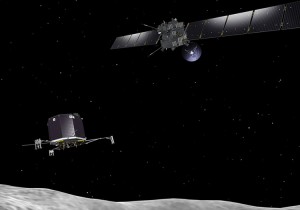
NASA Curiosity rover successfully land on Mars

The Curiosity Rover

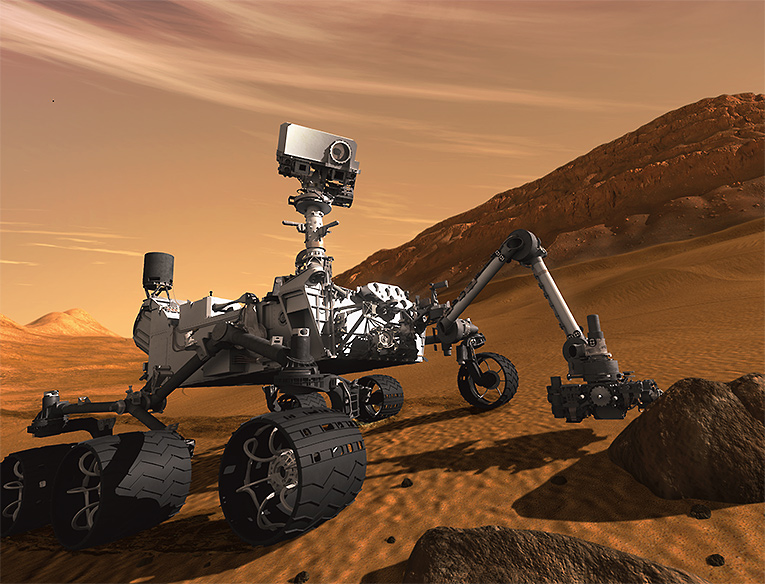
The Curiosity Rover 3D render (Image © NASA)

After traveling for 36 weeks from earth, and approximately 567 million kilometers (352 million miles), it was all down to the last 7 minutes to determine if the long travel was worth the wait.

By some called “7-minutes of terror”, the NASA Curiosity rover had to survive a complicated and intricate procedure to finally touch down on the surface of Mars. After months of waiting, now finally the scientists and engineers can breath a sigh of relief as the rover is securely seated on the surface of Mars.

The intense period called the entry, descent and landing (EDL) phase of the mission began when the spacecraft reached the top of the Martian atmosphere. At this time the Mars Science Laboratory spacecraft, carrying the Curiosity rover was traveling at about 5,900 meters per second (13,200 miles per hour). EDL ended about seven minutes later,  with the rover placed stationary on the surface.

The NASA controllers, and the rest of the world, relied on NASA’s Mars Odyssey orbiter to provide confirmation of a successful landing. Odyssey was turned to the right direction before the landing procedure started so it could listen to Curiosity during the landing. The rover touched down on Mars at 1:31 a.m. EDT.

Continue reading

NASA’s NuSTAR observatory launched this morning

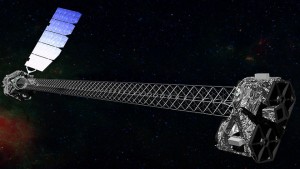
NuStar Observatory

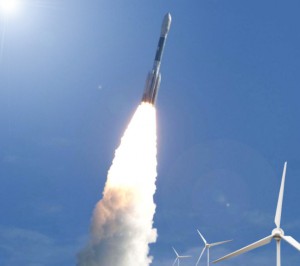
NuStar Observatory. Image: NASA

This morning NASA’s Nuclear Spectroscopic Telescope Array (NuSTAR) launched over the central Pacific Ocean at 9 a.m. PDT (noon EDT). It’s main objective is to unveil secrets of black holes using a unique set of eyes to see high-energy X-ray light from the cosmos.

“We all eagerly await the launch of this novel X-ray observatory,” said Paul Hertz, NASA’s Astrophysics Division Director. “With its unprecedented spatial and spectral resolution to the previously poorly explored hard X-ray region of the electromagnetic spectrum, NuSTAR will open a new window on the universe and will provide complementary data to NASA’s larger missions, including Fermi, Chandra, Hubble and Spitzer.”

Continue reading

SpaceX successfully launched it’s Falcon 9 rocket

SpaceX’s Falcon 9 launched

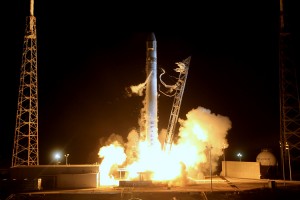
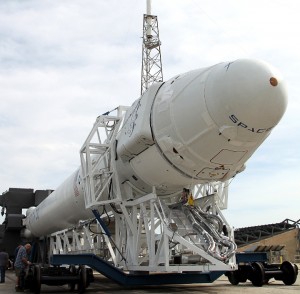
SpaceX’s Falcon 9 launched from Cape Canaveral Air Force Station. Image © SpaceX

Early this morning, at 3:44 a.m. Eastern, SpaceX Falcon 9 rocket, successfully launched from Cape Canaveral Air Force Station. On-board was the Dragon capsule heading for the International Space Station. During the journey the capsule will be subjected to a series of tests to determine, and prove to NASA, that the vehicle is ready to dock with the space station.

The mission makes Space Exploration Technologies (SpaceX) the first commercial company in history to attempt to send a spacecraft to the International Space Station. The launch today was flawless, and the vehicle’s first stage performed nominally before separating from the second stage. Shorty there after the second stage successfully delivered the Dragon spacecraft into it’s intended orbit. If required tests are successful, and NASA decides that the Dragon capsule is allowed to approach it’s target, SpaceX will attempt to dock the capsule with the space station on May 25.

Continue reading

SpaceX launch aborted just as engines started firing.

SpaceX Falcon 9 rocket

SpaceX Falcon 9 rocket being checked after launch abort.

The launch of SpaceX Falcon 9 rocket this morning was unfortunately aborted at 4:55am EDT, just a few seconds after it’s nine Merlin engines started up. The internal computers monitors the engines closely during launch, and it found a parameter that was out of bounds on one of the engines. This lead to an immediate cut off of all engines for safety reasons. With a narrow launch window of just one second, a new launch is preliminary set for Tuesday 22 May at 3:44am EDT (07:44am UTC), but this could be subject to change.

Continue reading

The SpaceX Falcon 9 rocket ready to launch tomorrow

SpaceX Falcon 9 Rocket

Dragon spacecraft and Falcon 9 rocket on it's way to the launch pad. Photo © SpaceX.

The first ever launch of a private vehicle heading for the International Space Station (ISS) is set to launch early morning of May 19. The launch has been pushed back several times, but after a successful launch rehearsal April 30 by the SpaceX launch team, the Falcon 9 rocket is finally ready for take off. The launch is planned for 4:55am EDT (08:55am UTC) and NASA will have live coverage of the event available via NASA TV. It will also be available via SpaceX Webcast.

The mission was originally intended to include only the launch of the Falcon 9 rocket, and tests of the Dragon capsule in orbit. It now also include plans for the Dragon capsule to physically connect to the Space station and deliver supplies such as food, clothing and batteries as well. The journey will also give both SpaceX and NASA the chance to test out the capsule’s sensors and control systems as it approaches the International Space Station, collecting information that can be vital for future missions.

Continue reading

SpaceX to launch April 30 after NASA gives it all-clear

Space X Dragon Capsule

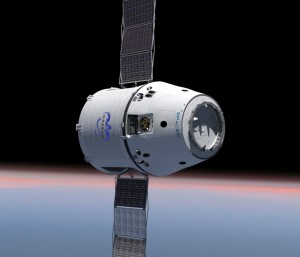
SpaceX Dragon Capsule (© SpaceX)

A private spaceship, built by the company Space Exploration Technologies (SpaceX) of Hawthorne, California, is soon heading for the International Space Station. The launch is planned for April 30, and if successful will mark a historic event, making SpaceX’s Dragon the first commercial American robotic spacecraft to have ever flown and dock with the International Space Station.

The unmanned capsule, named Dragon, will be the first of a new fleet of commercial spacecraft being developed to deliver cargo to the station. The spacecraft will on this first test-run rendezvous with the space station and then be captured by astronauts, operating a robotic arm and offload some cargo. If SpaceX’s April test flight goes according to plans, another Dragon capsule will make the first official cargo delivery run in August.

Continue reading

NASA’s Dawn spacecraft has discovered new features on Vesta

The Canuleia crater on Vesta

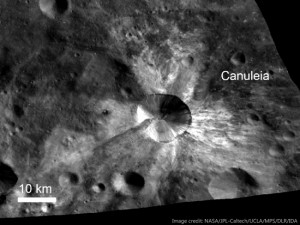
The Canuleia crater on Vesta

NASA‘s Dawn spacecraft has revealed some new and unexpected details on the surface of the giant asteroid Vesta. The images and data captured shows the diversity of Vesta‘s surface, and reveal unusual geologic features. Some never previously seen on a asteroid.

Being one of the brightest objects in the solar system, Vesta is the only asteroid in the main belt between Mars and Jupiter visible to the naked eye from Earth. Scientists have previously seen brightness variations in previous images of Vesta captures with NASA’s Hubble Space Telescope, but the new images captured by the Dawn spacecraft found that some areas on Vesta can be nearly twice as bright as others. This could potentially reveal clues about the asteroid’s history.

Continue reading

Spitzer space telescope finds solid Buckyballs in Space

Buckministerfullerene

Solid shape Buckyballs (Image from nasa.gov)

Astronomers using data from NASA’s Spitzer Space Telescope have for the first time discovered buckyballs in a solid form in space. Buckyballs are microscopic carbon spheres formally named buckministerfullerene. They are named after their resemblance to the late architect Buckminster Fuller’s geodesic domes. Prior to this discovery, they have only been found in gas form in space.

The so called Buckyballs are made up of 60 carbon molecules arranged into a hollow sphere, like a soccer ball. Their unusual structure makes them ideal candidates for electrical and chemical applications, including superconducting materials, medicines, water purification and armor.

Continue reading

NASA looking to go green, seeking new propellant technology

NASA going green

NASA seeking green propellant technology

NASA is now looking for alternatives to be more environmentally friendly, and seeking technology proposals for green propellant alternatives to the highly toxic fuel hydrazine used today. Hydrazine is an efficient and ubiquitous propellant that can be stored for long periods of time, but at the same time it is also highly corrosive and toxic. The fuel is used extensively both on commercial and defense department satellites, as well as for NASA science and exploration missions.

In a way to minimize environmental hazards and pollutants, and also lower costs for rocket launches, NASA is now looking for innovative and transformative fuels that are less harmful to our environment. “High performance green propulsion has the potential to significantly change how we travel in space”, said Michael Gazarik, director of NASA‘s Space Technology Program at the agency’s headquarters in Washington. “NASA’s Space Technology Program seeks out these sort of cross-cutting, innovative technologies to enable our future missions while also providing benefit to the American space industry. By reducing the hazards of handling fuel, we can reduce ground processing time and lower costs for rocket launches, allowing a greater community of researchers and technologists access to the high frontier.”

Continue reading

NASA’s Kepler telescope finds 26 additional planets

NASA Kepler Misson

NASA Kepler Misson, Image Credit: NASA/JPL-Caltech/R. Hurt

The Kepler space telescope have discovered 11 new planetary systems, hosting 26 confirmed planets. The discoveries adds to the list of confirmed planets outside the Earth’s solar system to 729, of these 60 has been found by the Kepler team

The Kepler telescope was successfully launched into space from Cape Canaveral Air Force Station, Fla., aboard a United Launch Alliance Delta II at 10:49 p.m. EST March 6, 2009. Kepler is designed to find the first Earth-size planets orbiting stars at distances where water could pool on the planet’s surface. Liquid water is believed to be essential for the formation of life. The mission is focused on discovery and as the mission progresses, Kepler will drift farther and farther behind Earth in its orbit around the sun. NASA’s Spitzer Space Telescope, which was launched into the same orbit more than five years ago, is now more than 62 million miles behind Earth.

Continue reading